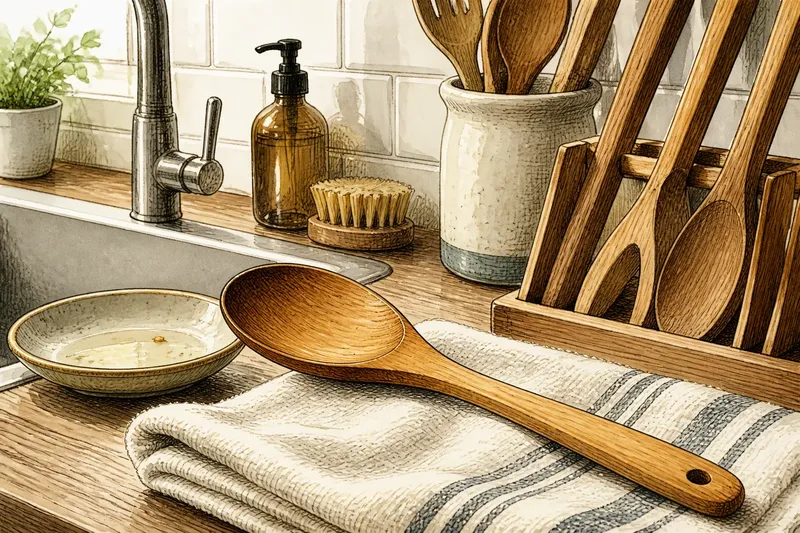
Why a Clear Purpose Helps a Tool Stay in Use
A clear purpose helps a tool stay in use by making it easier to find, return, and maintain without adding clutter or extra steps to daily work.
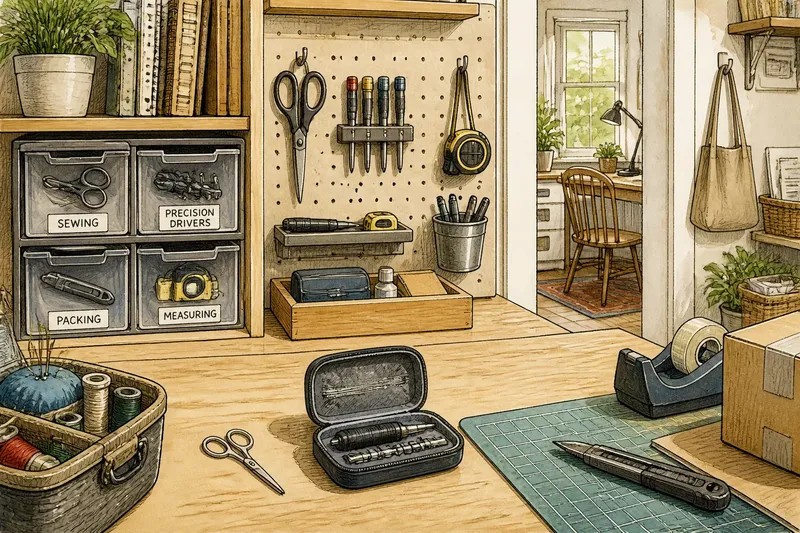
You reach for the scissors to open a package, but they are buried in a desk drawer beneath tape, pens, and loose batteries. A clear purpose for a tool can prevent that small search from becoming a reason to grab something else. When an object is designed and stored around one regular task, it is easier to recognize, retrieve, return, and care for.
That does not mean every tool needs a single exclusive use. It means the job that matters most should be easy to see in the tool’s form and its home. A useful arrangement connects three things: the task, the object that suits it, and a place where the object naturally goes back.
What does a clear purpose change?
A tool’s purpose is more than the name on its packaging. It is the particular job someone expects it to do, in the setting where that job comes up. “Cutting” is broad; “trimming thread at the sewing basket” is specific. The second description makes it easier to choose a suitable pair of scissors and decide where to keep them.
Specificity reduces small decisions. If a tool has a familiar task and a predictable home, you do not need to search the whole room or compare several options each time. The arrangement works like a labeled drawer in a kitchen: the label is useful, but the contents and the drawer’s location make the system real.
Purpose also helps distinguish a tool from an item that merely accumulates. If you cannot name a task that occurs in your routine, the object may not need a convenient place in that routine. It can be stored elsewhere, shared, or reconsidered. The point is not to judge the object; it is to make the useful ones easy to use.
How should the task shape the tool?
Start with the task’s actual demands. Notice what material the tool handles, where you use it, and what makes the action comfortable. A pair of scissors used for paper at a desk may benefit from a different size and handle shape than scissors kept near fabric. A narrow screwdriver used on eyeglasses has a different purpose from a household driver used for furniture hardware.
These distinctions matter because tools are often chosen by category alone. A person sees “scissors” or “pliers” and assumes any version will do. But grip, reach, edge, weight, and the space available around the work can affect whether the tool feels ready for its task. The right design is not necessarily the most elaborate one. It is the one whose useful features match the job without making the action awkward.
Say you often tighten the small screws on a child’s toy at the kitchen table, and the only screwdriver you own is a bulky model in the garage. Imagine choosing a compact driver with a tip suited to those screws and keeping it in a small case near the household supplies. The expected observable result is that the suitable driver is available where the task occurs, rather than requiring a trip to retrieve a less convenient tool. If the task changes, the choice can change too.
Where should the tool live?
Storage should follow the path of the task. Put the object near the place where the work begins, not merely where there happens to be empty space. A tape measure used for home projects may belong with a project bin; a letter opener used at a mail station may be better beside the incoming mail. Proximity can make returning the tool feel like the last part of the task.
Make the home visible and easy to use. A hook, divided tray, shallow drawer, or labeled container can work, depending on the object and the room. A good place makes it apparent where the tool goes and leaves enough room to put it back without rearranging unrelated items. If the storage spot is crowded or hard to reach, the intended home may exist in theory but not in practice.
Keep the route simple. A tool used beside a work surface should not need to pass through several rooms before it can be stored. At the same time, convenience should not override sensible storage: sharp, fragile, or otherwise potentially hazardous objects belong somewhere appropriate for the people and conditions in the home. Follow the item’s label or manufacturer instructions, and local rules where they apply.
How can one purpose coexist with other uses?
Many tools do more than one job. A sturdy utility knife might open boxes and trim a loose piece of packaging. The useful question is not whether an object can serve multiple purposes, but whether its secondary uses interfere with the main one. If a tool is constantly borrowed for another task and left elsewhere, it may need a second tool, a different home, or a clearer agreement among the people who share it.
One approach is to assign a primary home and allow occasional borrowing. The primary home stays tied to the regular task, while the borrower returns the object there after use. Another is to keep separate tools where tasks happen often enough to justify them. A spare pair of scissors near the wrapping paper can be more practical than carrying one pair between rooms, provided both pairs have clear roles.
There is no need to create a separate storage zone for every possible use. Too many categories can make ordinary retrieval feel like solving a filing system. Choose a home based on the task that happens most reliably, then make occasional uses easy to accommodate without obscuring that home.
What should you do when the tool stops fitting?
Notice the friction instead of treating it as a personal failure. A tool that regularly goes missing may be stored too far from its task. One that is awkward to handle may not match the material or the person using it. An object that keeps getting mixed with unrelated supplies may need a more visible boundary or a different container.
Change one part of the arrangement at a time. If the tool is suitable but hard to find, adjust its storage. If it is easy to retrieve but uncomfortable or ineffective for the job, reconsider the tool. If the task itself has faded from the routine, there may be no reason to preserve the old arrangement. This keeps a small inconvenience from turning into a broad, unnecessary reorganization.
Before replacing anything, check whether a simple adjustment would make the existing tool workable. A clear case, a better-fitting holder, or a spot closer to the work may address the problem. For damage, specialized equipment, or concerns about safe use, consult the maker’s guidance or an appropriate professional rather than improvising beyond your skill.
Which questions help clarify a tool’s purpose?
How do I choose a regular task for a multipurpose tool?
Choose the task that comes up often and benefits most from having the tool close at hand. Treat other uses as occasional unless they happen regularly enough to deserve their own arrangement.
Should I store a tool near where I use it or where I maintain it?
For a tool used often, its point of use is usually the more helpful home. If it needs a separate place for maintenance or secure storage, make that distinction clear and keep the return route manageable.
What if several people share the same tool?
Agree on one recognizable home that all users can reach and understand. A visible hook or container can make the shared arrangement clearer than relying on one person to remember where the tool was last left.
When is a dedicated tool worth keeping?
A dedicated tool makes sense when a recurring task needs a particular shape, size, or setting and a general-purpose alternative is inconvenient. If the task is rare and the tool is easy to borrow or store elsewhere, a separate one may add clutter without helping the routine.
How can you tell whether the arrangement works?
Look for ordinary signs: you can name the task, find the tool without searching unrelated places, use it comfortably, and return it to a spot that still makes sense afterward. Maintenance should also be understandable. If the tool’s care needs are easy to overlook, store any suitable instructions or accessories with it, without crowding the space where it belongs.
A clear purpose does not freeze a tool in one role. It gives the object a dependable starting point, so changing circumstances are easier to notice. When a task moves to another room, a household routine shifts, or a different person takes over, reconsider the tool’s design and home together. That small check can keep a useful object ready for the work it is actually asked to do.