The Gentle Routine That Keeps a Wooden Spoon in Service
Wooden spoon care starts with prompt washing, full drying, and sensible storage, helping you choose a routine that suits your kitchen and cooking habits.
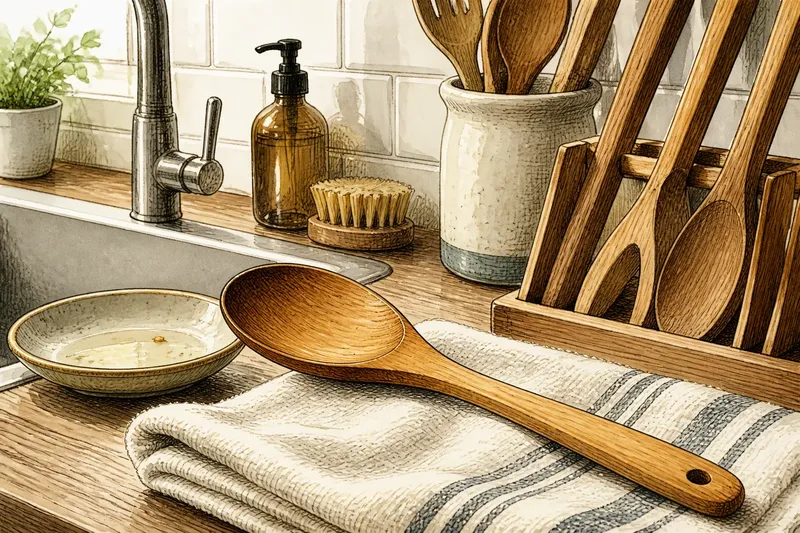
Wooden spoon care often comes down to a small choice after dinner: wash the spoon now, leave it near the sink, or deal with it when the kitchen is tidier. The best routine is one you can repeat without letting food dry onto the wood or putting a damp spoon away. How much attention that takes depends on how you cook, how many utensils you use, and where they can dry.
A wooden spoon is a simple tool, but wood absorbs and releases moisture differently from a smooth metal utensil. Treat it like a well-used cutting board: clean it promptly, let air reach it, and avoid trapping dampness. You do not need an elaborate care ritual. You need a reliable path from the pot to a clean, dry storage place.
Which wooden spoon care routine fits your kitchen?
There are three sensible approaches: wash each spoon as soon as cooking is done, wash it with the rest of the dishes shortly afterward, or keep a small rotation of spoons so a used one can dry while another is ready. None is right for every kitchen. The useful question is whether your routine leaves food stuck to the spoon or moisture sitting against it.
- Wash right away: Best for cooks who finish with a clear sink and want to put each utensil through the full cleaning and drying routine immediately.
- Wash after the meal: Suits a household that needs to serve dinner first, provided the spoon is not left in a pot, soaking bowl, or crowded sink for a long stretch.
- Rotate a few spoons: Helpful for frequent cooking or a busy shared kitchen, where one clean utensil can be ready while another dries. It calls for enough open storage space to keep the clean spoons separate from damp ones.
Choose the least complicated option that works with your actual kitchen rhythm. If you usually leave dishes until later, a routine that depends on washing immediately may be hard to keep. If your sink is often crowded, a spoon left beside it may collect splashes or get buried under wet dishes. A workable routine accounts for those ordinary snags rather than pretending they will disappear.
What should you do just after cooking?
Take the spoon out of the pan or bowl when you are finished using it. Scrape off food with a plate edge or a soft silicone scraper, then set the utensil where it will not sit in liquid. This quick pause matters when cooking something sticky, such as oatmeal, melted cheese, or a thick tomato sauce: residue is easier to remove before it dries hard.
If you still need the spoon during the meal, rest it on a clean spoon rest or small plate. Avoid leaving it balanced across a hot pot, where the handle may heat up, or inside the food as it cools. The aim is simply to keep the working end clean enough to wash and to prevent it from soaking in sauce or water.
Say you finish stirring a pot of rice and need to get lunch on the table. You scrape the spoon into the pot, rest it on a clean plate beside the sink, and serve the meal. When you return, the rice is still easy to rinse away, and the spoon has not been left submerged in the sink. That is a small, realistic pause—not a separate chore that demands perfect timing.
How do you wash wood without soaking it?
Wash the spoon by hand with warm water, a little dish soap, and a soft sponge or cloth. Clean both the bowl of the spoon and the handle, especially the places where the handle meets the head. Rinse away the soap, then check by touch for any slick or gritty residue. For stuck-on food, let warm water run over the spot while you loosen it gently with the sponge.
Avoid treating the utensil like a dish that can wait at the bottom of a sink full of water. Prolonged soaking can encourage the wood to take up moisture, and repeated wetting without a chance to dry can be hard on the surface. A dishwasher’s heat and long wash cycle can also be harsher than hand washing. Check the maker’s care directions if the spoon has a finish or construction that calls for specific handling.
Skip abrasive pads and harsh scraping that can roughen the wood. If a stubborn mark remains, a gentle pass with a soft sponge is usually a better first choice than trying to scour it away. Do not use the spoon if it has developed a deep split, loose pieces, or a surface that sheds fragments into food; set it aside and decide whether it can be safely repaired or should be replaced.
How can you dry and store a wooden spoon?
After rinsing, wipe the spoon with a clean towel, then leave it in an open, ventilated place until it is fully dry. A dish rack works if the utensil is not crowded among wet plates. You can also lay it on a dry towel and turn it so both sides have access to air. Keep it away from a damp sink corner or a closed drawer while moisture remains.
Once dry, store spoons in a clean crock, drawer divider, or utensil tray that keeps them from pressing against wet items. A crock is convenient on the counter, but it should not become a place where recently washed spoons are packed together. A drawer keeps utensils out of cooking splashes; it works best when the drawer and its contents are dry. Pick the storage spot that is easiest to return the spoon to after washing.
For a shared kitchen, make the drying place obvious. A rack with a clear section for wooden utensils, or a dry cloth laid beside the sink, can help people avoid putting damp spoons straight into a drawer. This is a modest bit of arrangement, not a rule for the whole household. The point is to make the safe next action easy to see.
Which routine should you choose for your cooking habits?
Match the routine to the moment when your kitchen is most likely to get busy. If you cook one meal at a time and tend to clear up as you go, washing the spoon promptly may feel natural. If dinner involves serving several people, washing after everyone has eaten may be more realistic. If you cook through the day, a small rotation can keep the utensil you need available without rushing the drying process.
Look at the physical setup, too. A narrow counter may not have room for a drying towel, while a deep drawer can hold a divider that separates wood from metal tools. If a utensil crock sits beside the stove, it may be convenient but exposed to grease and splashes. Small adjustments—moving the crock or assigning one side of a rack to wooden tools—can make the routine fit better.
Choose based on the spoon’s condition as well as your schedule. A smooth, intact utensil needs ordinary washing and drying. A roughened surface or lingering odor may call for a closer look at how it is being cleaned and stored. If the wood is cracked or splintering, do not try to solve the problem by adding oil or changing the wash routine; retire it from food use.
What questions come up about wooden spoon care?
Can a wooden spoon go in the dishwasher?
Hand washing is the gentler default because dishwasher heat and extended water exposure can stress wood. If the maker explicitly marks a particular utensil as dishwasher-safe, follow its care directions; otherwise, wash it by hand.
Should you oil a wooden spoon?
Oiling is not a substitute for washing or drying, and not every utensil needs it. If the maker recommends conditioning, use a food-contact-safe product intended for wood utensils and follow its directions.
What if food has dried onto the spoon?
Run warm water over the residue and loosen it with a soft sponge rather than digging at the wood with a knife. If it remains firmly attached, give it a brief moment under running water and try again without leaving the utensil to soak.
When should you stop using a wooden spoon?
Set it aside if it has a deep crack, splinters, loose fragments, or damage that prevents you from cleaning it fully. A spoon that remains intact and can be cleaned and dried is generally suited to ordinary kitchen use.
How can the routine stay simple over time?
Keep the sequence short: scrape, wash, rinse, towel-dry, air-dry, and store. Putting a clean spoon rest near the sink and leaving a little breathing room in the drying rack can remove the most common obstacles. If you share the kitchen, agree on one visible place for clean wooden utensils so a dry spoon does not end up beside a wet dish.
Wooden spoon care is less about special treatment than about avoiding two unhelpful endpoints: dried food left behind and damp wood shut away. Pick the washing option that fits your day, give the utensil open air, and return it to a dry home. With that modest routine, the spoon can stay ready for the next pot without becoming another fussy task on the kitchen list.